How Collectors Evaluate Restoration Quality on Antique Dolls
The Collector's Eye
Serious antique doll collectors are sophisticated evaluators of restoration quality. They have handled hundreds of dolls, studied reference materials extensively, and can spot the difference between original paint and restoration from across a room.
Understanding their evaluation criteria lets you deliver work that meets — and exceeds — their expectations.
What Collectors Look For
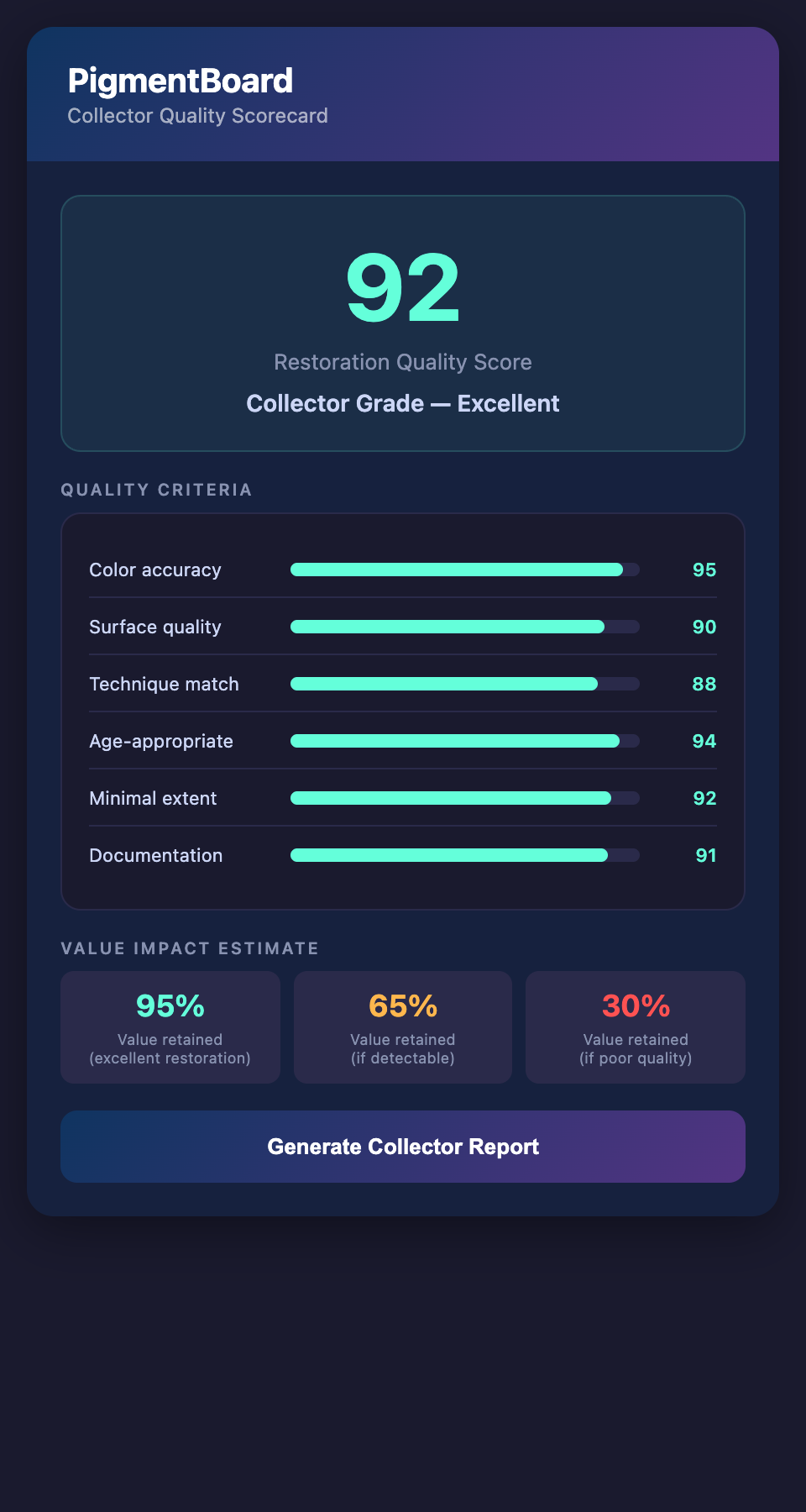
1. Color accuracy. Does the restoration match the surrounding original paint? Collectors compare the color under multiple light sources — their display lighting, daylight, and sometimes a flashlight or UV light.
2. Surface quality. Does the restoration paint have the same surface character as the original? China paint has a distinctive semi-gloss to matte finish that differs from acrylic, oil, or lacquer. Collectors can feel the difference by running a fingertip across the surface (with clean hands).
3. Technique authenticity. Does the painting technique match the manufacturer's original style? A Jumeau's feathered brows should not be replaced with solid arcs. A German doll's defined lip outline should not become a French-style soft edge.
4. Appropriate aging. Does the restoration look like 140-year-old paint or like fresh paint? Collectors are suspicious of colors that are too vivid, too uniform, or too perfect. They expect the restoration to harmonize with the aged original.
5. Extent of restoration. How much of the face is original vs. restored? Collectors prefer minimal restoration — small losses in-painted rather than entire features repainted. The doll's value is directly related to the proportion of original paint that survives.
6. Reversibility. Can the restoration be removed without damaging the original? Properly fired china paint is permanent — which is appropriate for major loss areas. But some collectors prefer reversible materials for minor touch-ups, preserving future options.
The Value Impact
The quality of restoration directly affects the doll's market value:
- Excellent invisible restoration preserves 90-100% of the doll's value relative to a perfect original
- Good but detectable restoration typically reduces value by 20-40%
- Poor restoration can reduce value by 50-80% — sometimes below the value of the unrestored doll, because poor restoration that must be removed adds cost
- Undisclosed restoration that is later discovered destroys trust and reputation
What Reduces Value Most
- Restoration that does not match the manufacturer's palette
- Colors that are too vivid or too modern-looking
- Thick, opaque application that lacks the luminosity of original china paint
- Restoration that extends beyond the damaged area (repainting original paint that was intact)
- Non-china-paint materials (acrylic, nail polish) that are identifiable by touch or UV
Building Collector Trust
Disclose everything. Document what was original, what was restored, what materials were used. Provide a written treatment report. Collectors respect transparency.
Show before-and-after documentation. Photographs under normal light and UV, taken before and after restoration, demonstrate exactly what was done.
Guarantee your work. Stand behind your color matching. If a collector finds an issue under different lighting conditions, offer to adjust.
Educate your clients. Explain why aged colors look the way they do. Explain the difference between matching the faded state (appropriate) and recreating the original vivid color (usually inappropriate). An educated collector is a better client.
Using Technology to Meet Collector Standards
Degradation modeling helps meet collector expectations by:
- Producing color matches that are scientifically informed, reducing metamerism risk
- Generating consistent results across multiple restorations (collectors who buy from you repeatedly expect consistency)
- Enabling before/after prediction images that demonstrate the restoration approach to the client
- Documenting the degradation parameters used, adding scientific rigor to your treatment reports
Want to deliver collector-grade restoration quality consistently? Join the PigmentBoard waitlist.