Common Mistakes When Color Matching Antique Doll Restoration
Learning From Common Errors
Mistake 1: Evaluating Before Firing
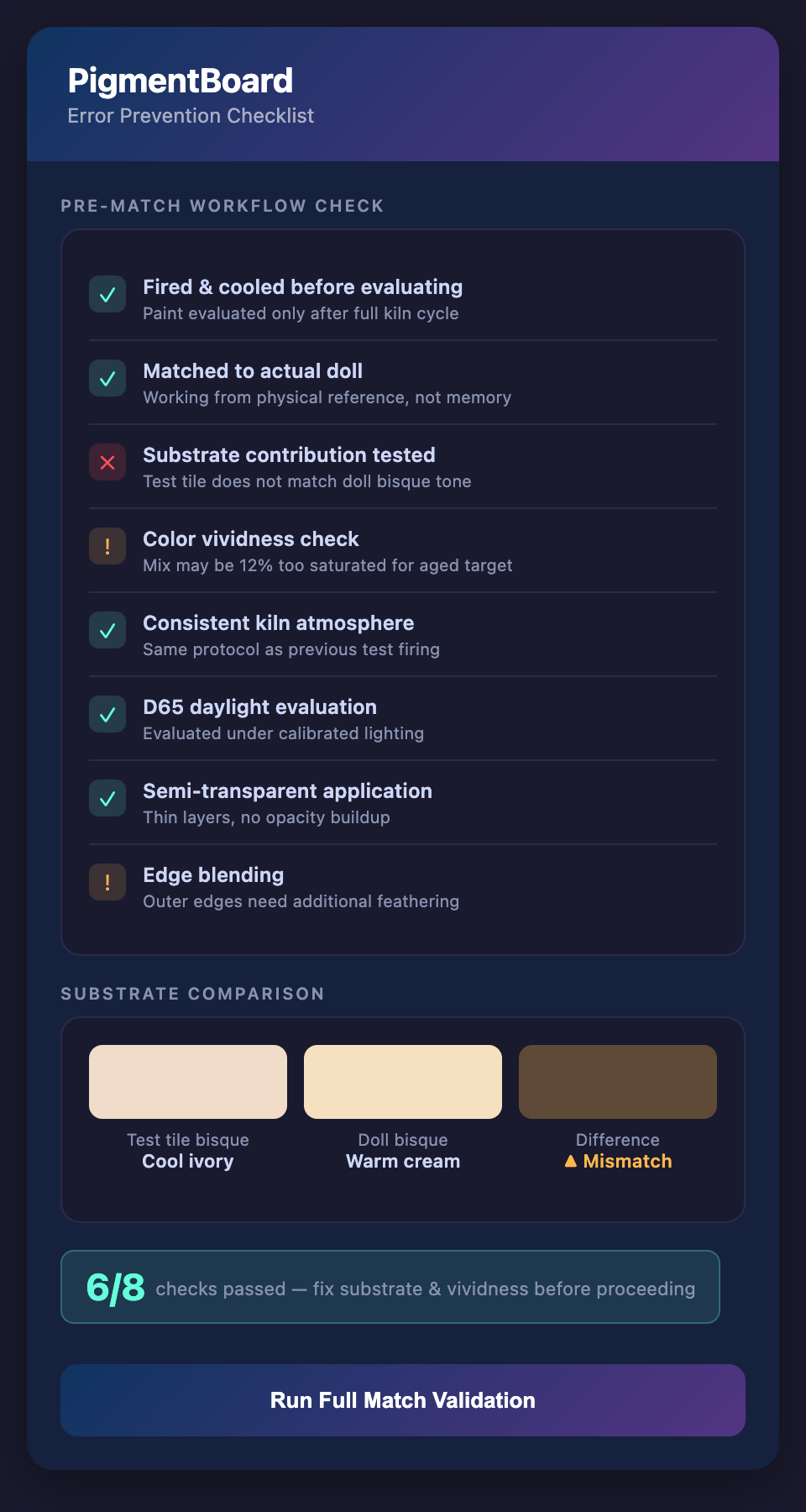
China paint looks completely different wet, dry-unfired, and fired. Never evaluate until fired and fully cooled.
Mistake 2: Matching to Memory
Every doll has faded differently. Always work from the actual doll or calibrated photographs, never from mental templates.
Mistake 3: Ignoring Substrate Contribution
China paint is semi-transparent. The final color includes the underlying bisque. Test on substrates matching the doll's actual surface.
Mistake 4: Colors Too Vivid
The most common overall error. Age-appropriate colors are less vivid than you expect. When in doubt, go more muted.
Mistake 5: Not Accounting for Firing Atmosphere
Kiln atmosphere affects china paint color. Use consistent protocols and monitor temperature.
Mistake 6: Matching Under Wrong Lighting
Invest in a D65 daylight lamp. Always evaluate under consistent lighting. Check under secondary illuminants.
Mistake 7: Applying Too Thickly
Doll painting is thin and semi-transparent. Thick applications look opaque and modern. Build up gradually.
Mistake 8: Not Blending Edges
Feather every application edge. Blend into surrounding original paint with dry brush or stipple.
Mistake 9: Overlooking Previous Restorations
Examine under UV fluorescence before any work. Map all non-original paint.
Mistake 10: Not Documenting
Record formula, firing conditions, and results before you clean up.
The Pattern
Most mistakes stem from working without a system. A structured workflow with degradation modeling, matched substrates, controlled conditions, and documentation prevents most errors.
Want a systematic approach that prevents common matching errors? Join the PigmentBoard waitlist.