How Smoke and Soot Yellowing Affect Antique Doll Paint
The Yellow That Is Not Supposed to Be There
Many antique dolls spent decades in homes heated by coal fires or filled with cigarette smoke. Both deposit a yellowish-brown film on all surfaces, including porcelain.
What Smoke Deposited
Coal smoke: soot, tar compounds, and sulfur compounds. Gas/oil lamp soot: finer, more uniform. Tobacco smoke: nicotine and tar forming a sticky yellowish-brown film.
How It Affects Doll Coloring
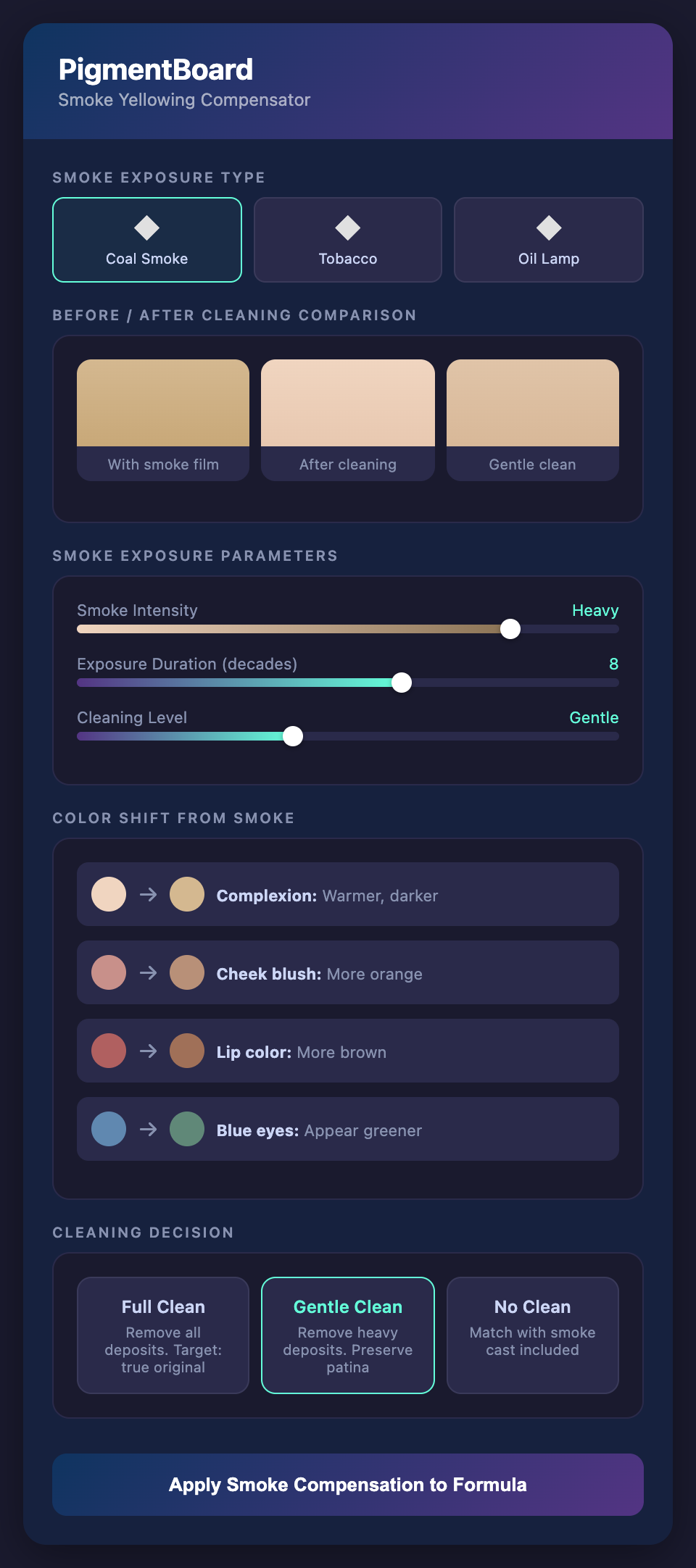
The film acts as a colored filter over the entire surface: complexion appears warmer and darker, cheek blush appears more orange, lip color appears more brown, blue eyes appear greener.
Identifying Smoke Yellowing
Comparison test: Examine protected areas (inside head cavity, behind ears, under wig). If protected areas are noticeably cooler or lighter, smoke yellowing is present.
Solvent test (with caution): A cotton swab with ethanol on an inconspicuous area may pick up yellow-brown residue.
UV fluorescence: Some deposits fluoresce as a uniform warm glow.
The Cleaning Decision
For cleaning: Reveals true original coloring. Simplifies color matching. Against cleaning: Risks damaging original china paint. Aggressive cleaning creates unnaturally pristine look. Middle path: Gentle cleaning to remove heaviest deposits while preserving patina.
Color Matching Implications
If cleaning: target color is cooler and lighter than the pre-cleaning appearance. If not cleaning: all formulas need to incorporate the warm yellow-brown cast. The degradation model needs a "smoke exposure" parameter.
Want to model smoke yellowing alongside UV fading and wear? Join the PigmentBoard waitlist.