Aging Costumes for Different Socioeconomic Characters
Aging Tells a Social Story
In any period production, the aging on a character's costume communicates their social position, occupation, and life circumstances as eloquently as the costume's cut and fabric. A costume designer's aging direction is inherently character-specific.
Wealthy Characters
Quality of original fabric: Higher-quality dyes (better light-fastness), finer weaves, more expensive fibers.
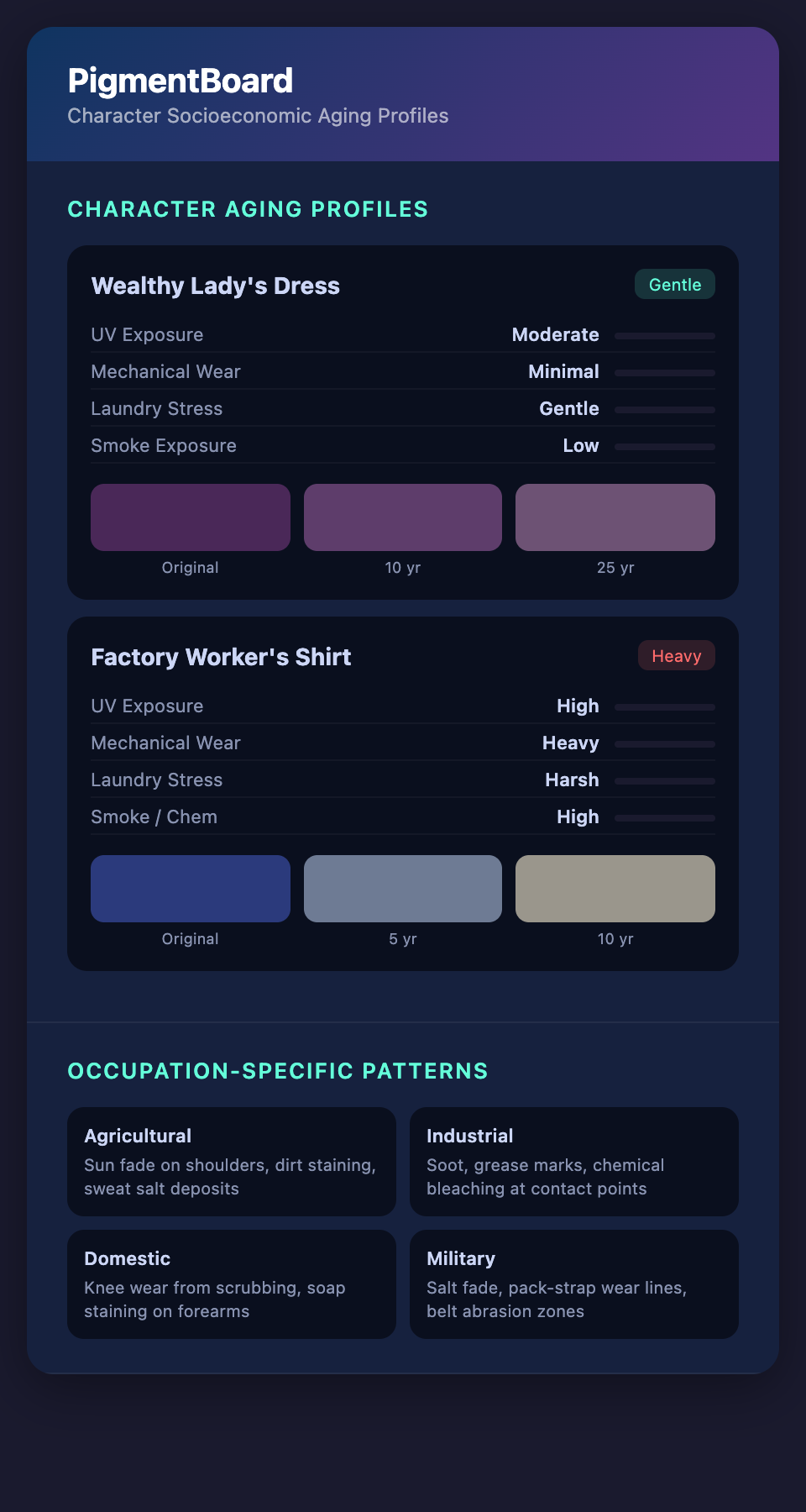
Aging profile: Careful storage and maintenance. Less mechanical wear. Less laundry damage (servants handled delicately). More UV from display (worn in well-lit rooms, at social events). Less smoke exposure (better-ventilated homes). Overall: gentle, even aging with preserved color integrity.
Aging treatment: Subtle fading, minimal distressing, maintained fabric structure. The aging should suggest "well-kept over time" rather than "hard use."
Working-Class Characters
Quality of original fabric: Cheaper dyes (more fugitive), coarser weaves, less expensive fibers.
Aging profile: Heavy mechanical wear. Frequent, harsh laundering. Significant sun exposure (outdoor work). Heavy smoke exposure (coal-heated homes). Possible chemical exposure (depending on occupation). Overall: aggressive, uneven aging with significant color loss and physical degradation.
Aging treatment: Significant fading, extensive distressing, thinned fabric, visible mending, staining from work activities.
Occupation-Specific Aging
Agricultural workers: Sun fading (directional — stronger on shoulders and hat band area), dirt staining (red clay vs. dark loam vs. sandy soil), sweat staining, grass staining.
Industrial workers: Chemical staining, soot and grease, mechanical abrasion at tool-contact points, acid or alkali bleaching in textile/chemical workers.
Domestic servants: Moderate overall aging, specific wear patterns (knees for scrubbing, forearms for washing), soap and water staining.
Sailors/military: Extreme sun and salt fading, heavy mechanical wear, specific patterns from equipment contact (pack straps, belt areas, boot-top line).
Using the Model for Character-Specific Aging
The degradation model can be set differently for each character:
- Wealthy lady's dress: UV=moderate (indoor display), humidity=low (good storage), wear=minimal, laundry=gentle, smoke=low
- Factory worker's shirt: UV=high (outdoor breaks), humidity=moderate, wear=heavy, laundry=harsh, smoke=high, chemicals=occupation-specific
Each set of parameters produces a different target color and aging character — from the same base fabric and dye.
Ready to dial in character-specific aging profiles? Join the PigmentBoard waitlist.