How Different Fabric Types Accept Aging Treatments Differently
One Process Does Not Fit All
Costume aging often involves multiple fabric types in a single garment — a cotton bodice with silk trim and wool interlining. Applying the same aging treatment to the entire garment produces uneven results because each fiber type responds differently.
Cellulose Fibers (Cotton, Linen)
Chemical response: Readily accept bleach discharge. Sodium hypochlorite removes dye effectively. Can be over-bleached to white relatively easily.
Dye uptake: Accept most aging dyes (tea, tannin, iron solutions) easily.
Physical aging: Respond well to sandpaper distressing. Surface fibers pill and fray, creating authentic wear appearance.
Risks: Over-bleaching weakens the fiber. Acidic aging treatments can cause embrittlement over time. Hot iron-based treatments can cause irreversible damage.
Protein Fibers (Wool, Silk)
Wool chemical response: Resistant to chlorine bleach (which damages wool fibers). Requires hydrogen peroxide or reducing agents for discharge. Felts if agitated in hot water.
Silk chemical response: Extremely sensitive to chlorine bleach (destroys fiber). Hydrogen peroxide is safer but still risks damage. Weighted silk (tin-weighted, historically common) is especially fragile.
Dye uptake: Both accept acid dyes and tannin-based aging treatments. Tea staining works well on both.
Physical aging: Wool can be brushed, sanded, and felted for wear effects. Silk is more delicate — distressing must be subtle.
Risks: Heat damage (hot water, steam) can permanently alter both fibers. Alkaline conditions damage wool. Chlorine destroys silk.
Synthetic Fibers
Modern productions often use synthetic fabrics for cost or performance reasons, even in period productions:
Polyester: Resistant to most aging chemicals. Requires specific disperse dyes. Does not accept tea staining. Can be heat-distressed with an iron or heat gun.
Rayon/viscose: Accepts aging treatments similarly to cotton (it is regenerated cellulose). More delicate when wet.
Nylon: Accepts acid dyes. Can be aged with tea and tannin. Melts under heat distressing.
Multi-Fiber Aging Strategies
Option 1: Age before assembly. Age each fabric piece separately using fiber-appropriate methods, then assemble the garment. This is safest but requires advance planning.
Option 2: Selective aging. Apply fiber-appropriate treatments to specific areas of the assembled garment, masking or protecting other areas.
Option 3: Universal treatments. Use aging agents that work on all fibers present. Tea staining, light spray-on pigments, and mechanical distressing are relatively universal.
The Model's Role
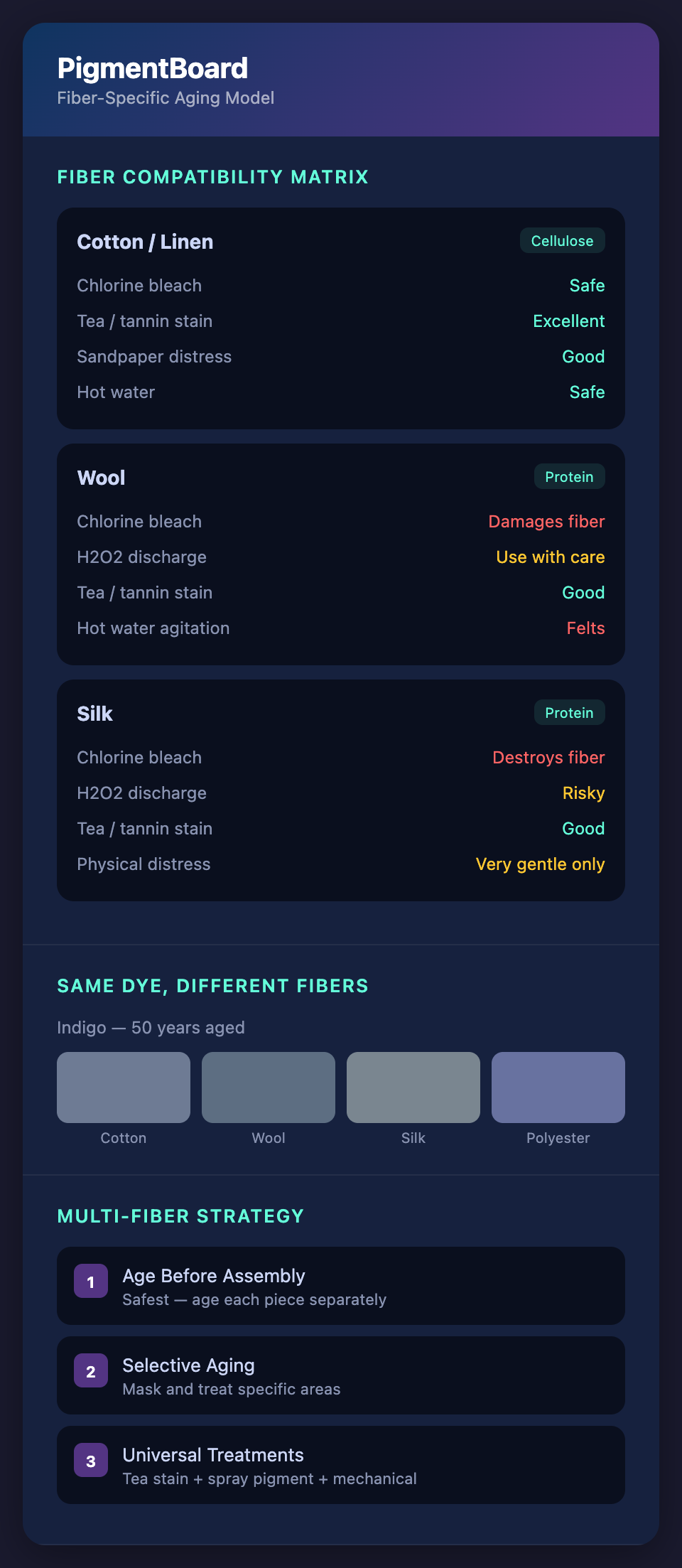
A degradation model that accounts for fiber type predicts different aging rates and color shifts for each fabric in the garment:
- Cotton dyed with indigo fades one way
- Wool dyed with the same indigo fades differently (different rate, different color shift)
- Silk fades differently still
By modeling each fiber type independently, the dyer can develop a coordinated aging plan that produces a harmonious result despite the different treatments required for each fabric.
Want to model fiber-specific aging for multi-fabric costumes? Join the PigmentBoard waitlist.