Organizing Market Research Without Losing Historical Context
The Context Loss Problem
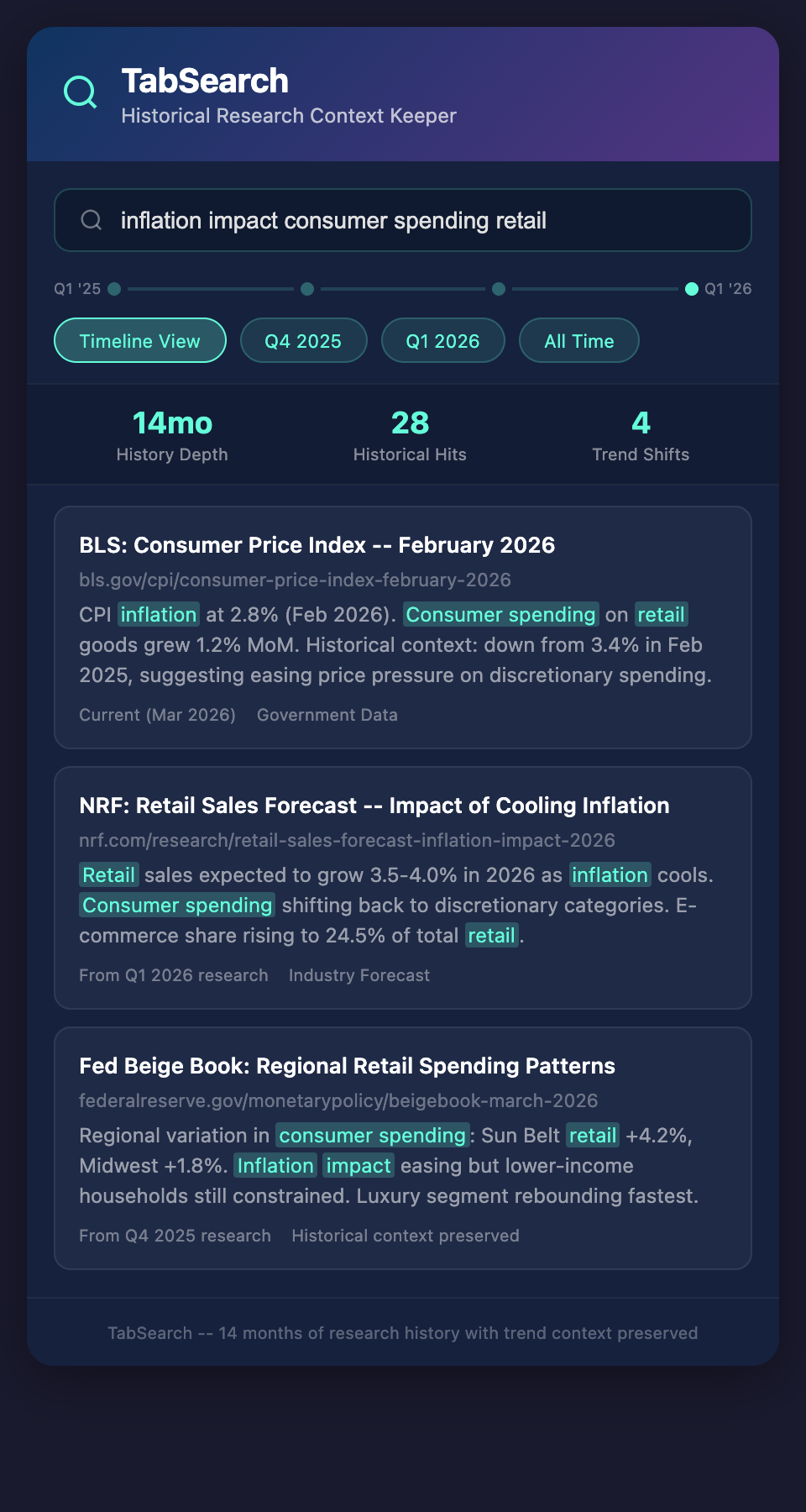
A marketing manager pulls up a competitive analysis from eight months ago. It states: "Competitor A is significantly cheaper than us."
She thinks: "Is this still true? Have they changed? Have we changed? Was this analysis comparing the same customer segments or different ones? Was this based on list pricing or negotiated deals?"
Without context, the analysis is nearly useless. It was useful eight months ago. But organizations that don't preserve context lose value from their research constantly.
Context comprises:
-
When was this analyzed? (Competitive positioning changes)
-
What was the analytical method? (Pricing comparison methodology affects conclusions)
-
What data was considered? (List pricing vs. average negotiated pricing tells different stories)
-
What was the competitive set? (If they analyzed three competitors but five exist, conclusions are incomplete)
-
What was the business context? (A "consolidation trend" conclusion means something different in a market contracting vs. expanding)
Research without context decays into noise. Research with preserved context compounds in value.
The Organizational Costs of Context Loss
Wasted Research
A 2024 Forrester study found that 40% of research conducted by knowledge workers goes unused. Not because the research was bad, but because future researchers don't know it exists or can't understand it.
If your company conducts $500k worth of competitive intelligence annually and 40% goes unused, you're burning $200k. Preserving context doesn't add cost; it reclaims value you're already spending.
Repeated Analysis
Without accessible historical context, teams re-research the same questions:
Year 1: "Who's winning in the SMB segment?" (8 hours of analysis)
Year 2: New team member: "Who's winning in the SMB segment?" (8 hours of re-analysis)
Year 3: Different team member: "Who's winning in the SMB segment?" (8 hours of re-analysis)
The same analysis gets repeated because it's not easily discoverable or because new team members don't know previous analysis exists.
Incorrect Assumptions
Without historical context, teams make decisions based on incomplete information:
A sales leader analyzes "Why are we losing to Competitor A?" without knowing that extensive analysis was conducted three months ago showing it was specifically pricing-related. They spend two weeks on a comprehensive analysis, arriving at the same conclusion, wasting two weeks that could have been spent on response strategy.
A System for Organizing Research With Context
Metadata as Context
Every piece of research should include metadata that preserves context:
Analytical Metadata:
-
Analysis date: When was this analysis conducted?
-
Analyst/owner: Who performed the analysis?
-
Data sources: What data informed this analysis? (Customer interviews, win/loss data, public pricing, etc.)
-
Methodology: How was the analysis conducted? (Quantitative comparison of feature lists, qualitative assessment based on customer feedback, etc.)
-
Confidence level: How confident are you in these conclusions? (High/medium/low)
-
Assumptions: What assumptions underlie the analysis? (E.g., "assumes pricing includes standard support")
Update Metadata:
-
Last reviewed: When was this analysis last reviewed?
-
Recommendation for update: "Review in Q3 2026 when pricing changes are likely"
-
Known changes: "Competitor A's pricing changed in Feb 2026; analysis reflects old pricing"
Relevance Metadata:
-
Relevant to: What business decisions does this inform? (Sales positioning, pricing strategy, product roadmap)
-
Scope: What customer segments or geographies is this relevant to?
Without this metadata, you find research but can't assess whether it's still relevant.
Evolutionary Tracking
Rather than replacing analyses, track how conclusions evolve:
Analysis v1 (Jan 2026): "Competitor A is moving upmarket based on hiring patterns and messaging shift"
Analysis v2 (Mar 2026): "Competitor A is moving upmarket—confirmed by customer conversations and new feature announcements"
Analysis v3 (June 2026): "Competitor A's upmarket move is complete. They've repositioned entirely, ceased SMB outreach."
This creates a narrative of strategic evolution rather than isolated snapshots. When you see the progression, you understand not just what they did but how they did it and when they did it.
Source Attribution and Traceability
Every conclusion should trace back to supporting sources:
Conclusion: "We're losing 30% of mid-market deals to Competitor B"
Supporting sources:
-
12 lost deal analyses from Q1 2026 with Competitor B cited
-
3 customer interviews where Competitor B was mentioned as alternative
-
1 sales rep observation in account notes
-
Pipeline data showing conversion rate decline for competitive deals
This traceability serves two purposes: (1) It establishes confidence—you're not making this claim casually, and (2) It enables validation. When the claim is questioned, you can immediately produce the supporting evidence.
Context Preservation Through Time Periods
Organize research by time period to preserve temporal context:
Current period (live): Most actively updated, relevant to immediate decisions
Recent history (6 months): Still relevant; informs trends
Historical archive (6+ months): Reference material for understanding evolution
Research naturally decays in relevance over time. Explicitly acknowledging time periods prevents old analyses from being mistaken for current analyses.
Annotation and Refinement System
As research is reviewed and referenced, it should be refined:
Original analysis (Jan): "Competitor A appears to be expanding SMB offering"
User finds and reviews (Mar): Annotations: "Confirmed through customer conversation and their Q1 press release"
Another user references (May): Annotations: "Validated; they've launched SMB-specific pricing"
Over time, original tentative conclusions become validated, refined, and connected to supporting evidence. This refinement process adds significant value.
Practical Implementation
Document Structure
Every research document should include:
[RESEARCH TITLE]
Date: When this was analyzed
Analyst: Who conducted this analysis
Last Updated: When was it last reviewed
Next Review: When should this be updated
Relevant To: What decisions this informs
[RESEARCH SUMMARY - 2-3 sentences]
[CONTEXT]
-
Business context: What was happening in the market at analysis time?
-
Competitive set analyzed: Which competitors were considered?
-
Data sources: What data informed this?
-
Methodology: How was the analysis conducted?
[MAIN ANALYSIS]
[Detailed findings with supporting evidence]
[SUPPORTING SOURCES]
[Source 1: Link and quote]
[Source 2: Link and quote]
[CONFIDENCE AND CAVEATS]
-
Confidence level: High/Medium/Low
-
Key assumptions: What must be true for this to remain valid?
-
Known limitations: What's missing from this analysis?
-
Validity period: When should this be re-evaluated?
[ANNOTATED EVOLUTION]
-
Jan 26 (original): Initial hypothesis
-
Mar 26 (annotated): Validated by customer interviews
-
May 26 (annotated): Confirmed in earnings call
This structure preserves context, traces evolution, and makes it easy to understand whether analysis is current or historical.
Organization for Multiple Discovery Paths
Store research to be discoverable by:
-
Time period: Q1 2026 competitive analyses
-
Competitor: All research about Competitor A
-
Topic: All pricing strategy analyses
-
Relevance: All analyses relevant to sales positioning
Use folders, tags, or database categorization to enable all four discovery paths. When someone needs "all competitive analyses about Competitor A from the past six months," they should find them in under 30 seconds.
Maintenance Cadence
Monthly: Review recent analyses. Are they holding up? Do annotations suggest updates needed?
Quarterly: Deep-clean. Archive analyses that are more than 12 months old. Consolidate duplicate analyses. Update confidence levels.
Annually: Comprehensive review of archived research. What patterns emerge across a full year of intelligence?
This maintenance prevents degradation and ensures your research library remains useful.
Real-World Impact
Companies with context-preserving research systems see:
-
60% reduction in time spent re-researching questions (because previous analysis is discoverable)
-
30% improvement in analysis quality (because analysts are building on previous work rather than starting from scratch)
-
Faster strategic response (because historical context enables pattern recognition)
-
Better board conversations (because strategic analysis is informed by historical context)
A research system without context creates information silos. A research system with preserved context creates cumulative intelligence.
Join our waitlist to see how to build research systems that preserve context and compound in value over time.